The short version: the three things that decide how a flight with a toddler goes are whether they sleep, whether you can keep hold of them in the terminal, and whether your car seat survives the trip. Snacks and tablets help at the margins. These three do not.
We book a lot of family travel. This is the advice we give, roughly in the order it matters.
1. Sleep is the whole game
A toddler who sleeps for four hours of a six-hour flight has had a good flight, and so has everyone around them. The obstacle is that aircraft seats do not let small legs stretch out, so children wake constantly from the same postural jolt adults get — only more often, because they are shorter than the seat.
Inflatable footwell beds fill the gap between the seat and the seat in front, creating a flatter surface. The Kids Airplane Travel Bed is ours. Two important caveats we always give clients:
- Airline policies vary. Some carriers permit these in specific cabins or rows; others do not permit them at all. Check with your airline before you fly, and be prepared to be told no at the gate.
- They cannot be used during taxi, take-off and landing. Deflate and stow when asked.
2. Restraint in the terminal, not the aircraft
The genuinely frightening moments in family travel almost always happen airside, not in the air — a crowded gate area, a train between terminals, a moment of distraction at a bag drop. A soft harness or wrist link keeps a child within arm's reach when you have both hands on luggage.
We do not currently stock one. If you are buying, look for a padded chest harness rather than a wrist strap alone, and check the weight range before you order — most are sized for walking toddlers, not infants.
People have opinions about harnesses. Our position is that a parent with two bags, a boarding pass and a toddler has three hands' worth of tasks and two hands.
3. Protect the car seat
Gate-checked and hold-checked car seats get thrown, stacked and dragged. A damaged car seat is not always visibly damaged, and manufacturers generally advise replacing a seat after any significant impact — which is expensive and, more to the point, leaves you at your destination without one.
A padded travel bag is the cheapest insurance in family travel. We currently stock bags for booster seats:
| Bag | Best when | Why |
|---|---|---|
| Booster Seat Travel Bag with Luggage Strap | Travelling with a standard backless booster | Folds flat at home, name-tag window, luggage strap |
| Backless Booster Seat Travel Bag | Larger or bulkier boosters | Extra-large, and a high-visibility blue you can spot on the carousel |
For a full-size convertible or infant seat, we do not currently carry a bag we are happy to recommend, and we would rather say so than sell you the wrong one. Look for a padded, wheeled bag with a universal fit and a weather-resistant shell — whoever you buy it from. If you are flying with us on a booking, ask your advisor and we will tell you what we would buy this week.
A practical tip that applies to any bag you choose: bright colours are not a style choice here. A black car seat bag on a carousel of black bags is a fifteen-minute problem with a tired child attached to it.
4. The diaper bag decision
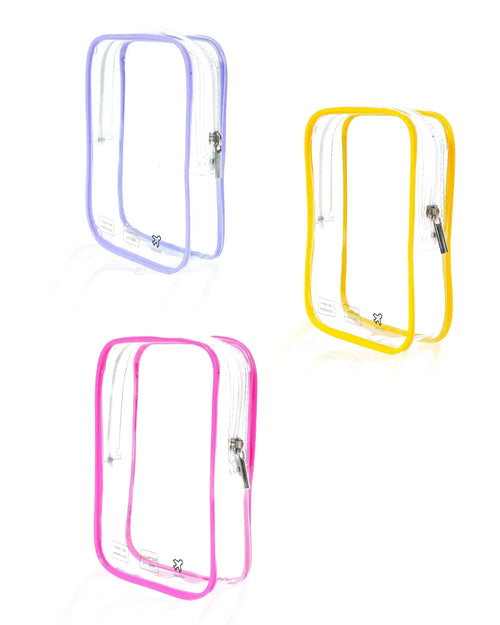
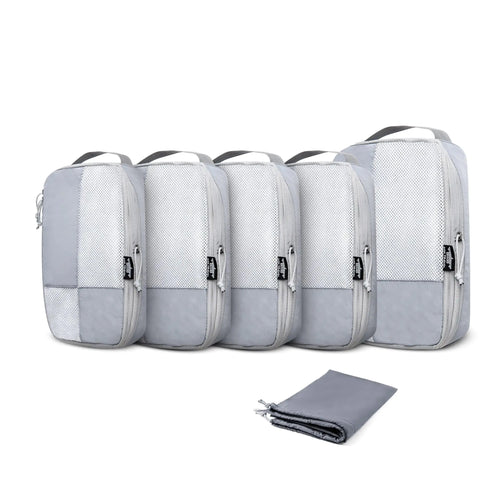
A backpack, not a shoulder bag. You need both hands, always. The Ergonomic Diaper Backpack puts changing supplies, bottles and spare outfits in reachable compartments, and a set of small zip pouches splits a larger bag into zones so you are not excavating for a wipe one-handed in a lavatory.
Pack two changes of clothes for the child and one spare top for yourself. Experienced parents already know why.
5. Feeding on the move
Cabin crew will usually provide hot water, but not on a schedule you control, and not during turbulence. A cordless bottle warmer removes the dependency — if you buy one, note that they contain a lithium battery, so it belongs in your carry-on rather than a checked bag. See the battery rules for why that matters.
What we would leave at home
- The full stroller, if the destination is walkable and you have a carrier. Gate-checking a large stroller adds twenty minutes at both ends.
- Bulky toys. Small, new and unfamiliar beats large and familiar every time.
- A second bag of snacks. One is enough. You will buy more airside anyway.
Common questions
Do toddlers need their own seat?
Under two, most airlines allow a lap infant. From two, a seat is generally required. Aviation safety authorities recommend an approved child restraint in its own seat at any age — the safest option and the more comfortable one on a long flight.
Can I bring a car seat on board?
If it is approved for aircraft use and you have bought a seat for the child, usually yes. Check the approval label and confirm with the airline.
What about ear pain on descent?
Something to suck or drink during descent helps. Feed on the way down, not on the way up.
Is an inflatable footwell bed allowed on my flight?
It depends entirely on the carrier and sometimes the cabin. Ask before you buy if that is the deciding factor for you.
Written by the advisors at WB Travel Associates, a travel agency in Virginia Beach, Virginia. Airline policies on child restraints and inflatable beds vary — always confirm with your carrier. Planning a family trip? Email store@wbtravelpros.com or call 800-211-3161.