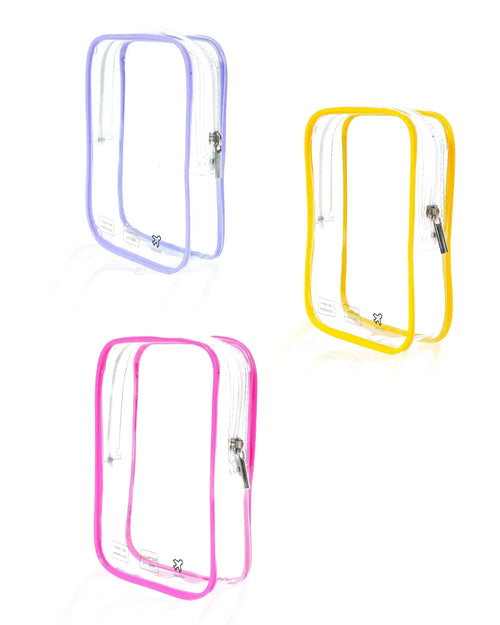
The short version: standard packing cubes organise your bag; they do not make it hold more. Compression cubes — the ones with a second zip — do genuinely create space by squeezing air out of your clothes. If your problem is finding things, buy standard. If your problem is fitting things, buy compression.
That distinction is the whole article, but the details below are what separates people who use their cubes from people who used them once.
The three systems that work
1. By type
One cube for tops, one for bottoms, one for underwear and socks. The default, and the right choice for a single-destination trip where you unpack once.
2. By outfit
One cube per day or per outfit. More work at home, far less at the destination. This is the system we recommend for multi-city trips and cruises, where you live out of the bag and never fully unpack. It is also the only system that works well for children.
3. By person
One cube per family member inside a shared case. This is how families avoid three suitcases for four days. Colour-coded cubes make it work without a labelling system.
Pick one and stay with it. The most common failure is mixing systems mid-trip, at which point the cubes become three bags you have to open to find anything.
How many cubes you actually need
| Trip | Cubes | Set |
|---|---|---|
| Weekend, carry-on only | 3–4 | 12-Piece Travel Organizer & Shoe Bag Set |
| One week, one destination | 6 | 6-Piece Packing Cubes |
| Two weeks or multi-city | 7–12 | 7-Piece Luxury Travel Accessories Kit |
| Family, one shared case | 8–10 | 8- & 10-Piece Luggage Organizer Set |
Six things that make cubes work
- Roll inside the cube, do not fold. Rolling fits more into a fixed volume and creases less. Fold only structured items — blazers, dress shirts.
- Fill each cube completely. A half-empty cube is a soft lump that lets everything shift. If a cube will not fill, use a smaller one.
- Heavy cubes go at the wheel end. In a roller case, weight near the wheels makes the bag pull straight rather than tipping.
- Keep one cube empty on the way out. That is your laundry cube — or your souvenir cube. A dedicated laundry bag like the one in the 12-Piece Travel Organizer & Shoe Bag Set keeps worn clothes away from clean.
- Do not compress structured items. Compression cubes are excellent for knitwear, t-shirts and jeans. They will ruin the shape of a suit jacket. Pack tailoring flat in a garment bag instead.
- Mesh windows earn their keep. If you cannot see into a cube, you will open it. Every cube you open is a cube you repack badly.
Compression cubes: the honest limits
We do not currently stock a compression set — the ones we could source were not good enough to put our name on. So take the following as advice rather than a pitch, and buy compression cubes wherever you find a well-made set.
They compress the clothes, not the mass. Your bag will fit more, and it will weigh the same or more — which matters on airlines with a carry-on weight limit. We have watched travellers compress their way into an over-weight carry-on more than once.
They also crease more than standard cubes. If you are packing something you need to look sharp in on arrival, compress everything else and leave that item flat on top.
Common questions
Do packing cubes save space?
Standard cubes: no, they organise. Compression cubes: yes, meaningfully — typically enough to skip a checked bag on a one-week trip.
Are packing cubes worth it for carry-on only?
This is where they help most, because the bag has to hold its shape at the gate. See our carry-on guide for why a bulging bag is the one that gets stopped.
What size cubes should I buy?
More small cubes beat fewer large ones. A large cube becomes a suitcase within a suitcase, which is the problem cubes were meant to solve.
Can I put shoes in a packing cube?
Use a dedicated shoe bag instead — most of our sets include one. Shoes in a fabric cube transfer dirt to everything the cube touches.
Written by the advisors at WB Travel Associates, a travel agency in Virginia Beach, Virginia. Browse Luggage & Bags.