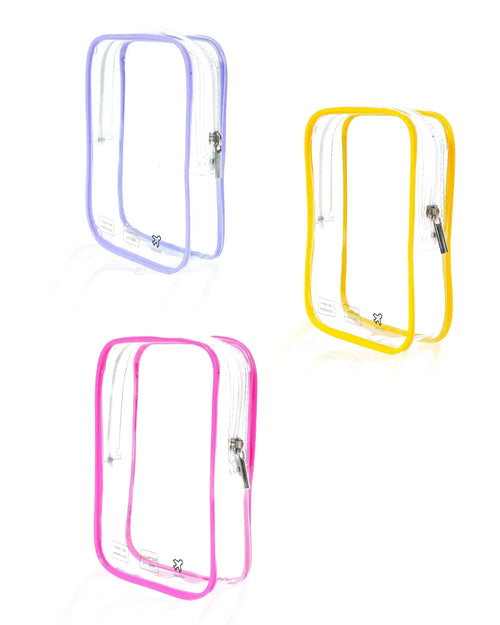
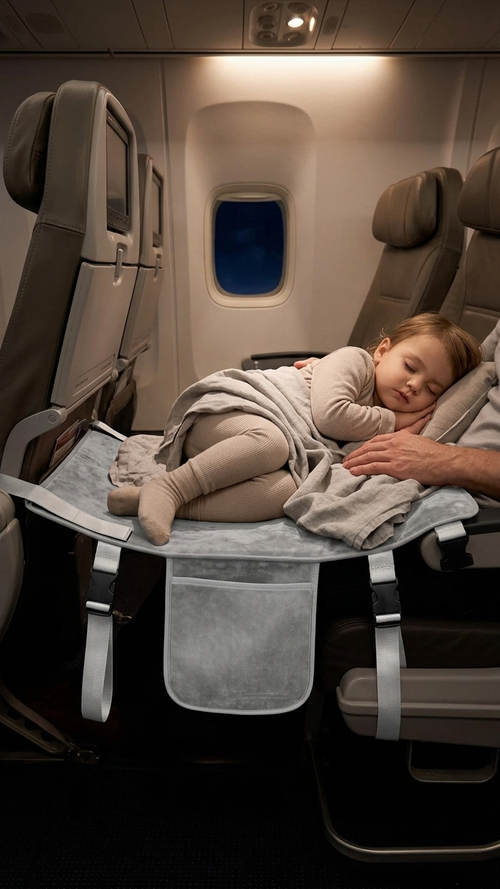
The short version: a carry-on gets gate-checked for one of three reasons — it is too tall, it is too deep once packed, or the flight is full and yours looks the biggest. You can control all three. Measure the bag including its wheels and handle, keep the depth under roughly 9 inches when packed, and board with a bag that compresses rather than bulges.
We book travel for a living, which means we hear about luggage twice: once when someone is choosing it, and again when it failed. This is what we have learned from the second conversation.
The four measurements that actually matter
Most carry-on size limits in the US cluster around 22 x 14 x 9 inches, but the number on the airline's website is not the number that gets you gate-checked. These are:
- Height including wheels and handle. Manufacturers sometimes quote the body only. A 22-inch body with 2 inches of wheel is a 24-inch bag, and the sizer at the gate does not care where the extra came from.
- Depth when packed, not empty. This is the one that catches people. An expandable case that measures 9 inches flat measures 11 inches with the expansion zip open, and expandable zips are almost always open by the return leg.
- Handle intrusion. Trolley handles that run inside the packing space cost you two to three inches of usable depth. External-channel handles cost you nothing but add a little weight.
- Weight empty. On any airline with a carry-on weight limit, every pound of empty bag is a pound of clothes you cannot bring.
Airline allowances change, and low-cost carriers are stricter than legacy carriers. Always check your specific airline before you fly — but if you buy to a true 22 x 14 x 9 including wheels, you will rarely be the person asked to step aside.
Hardside or softside?
| Hardside | Softside | |
|---|---|---|
| Protects fragile items | Better | Worse |
| Handles overpacking | Worse | Better |
| Fits an awkward overhead bin | Worse | Better |
| Shows scuffs | More | Less |
| External pockets | Rarely | Usually |
If you fly mostly full-service carriers with generous bins and you carry electronics or anything breakable, hardside wins. If you fly regional aircraft, low-cost carriers, or you always come home with more than you left with, softside wins. The Clear Hardside Luggage Case is our hardside pick precisely because you can see what is inside without unpacking it at security; the Multi-Function Carry-On Backpack is the softside answer for anyone who would rather carry than roll.
Where luggage actually fails
In our experience, in this order:
- Wheels. Two-wheel inline skate wheels last longer than four-wheel spinners but are worse on smooth floors. Spinners fail when a wheel housing cracks, usually after being dragged over a kerb.
- Zips. A zip that splits is a bag that is finished. Look for YKK or an equivalent named brand; unnamed zips on cheap cases are the single most common failure we hear about.
- Telescoping handle. Handles bend when a bag is pulled sideways with weight stacked on top. If you routinely stack a second bag, look for a bag rated for it.
- Shell corners. ABS is light and cheap. Polypropylene and polycarbonate are tougher and more temperature-stable. If you check your carry-on on regional legs, this matters.
Packing so the bag stays with you
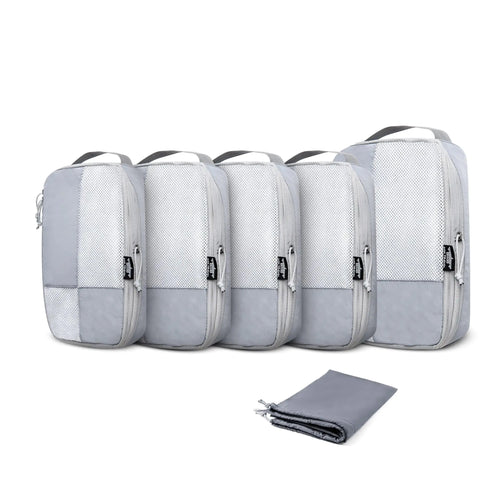
A carry-on that is packed loosely bulges, and a bulging bag is the one the gate agent notices. Compression is not about fitting more in; it is about making the bag hold its shape. A six-cube set like our 6-Piece Packing Cubes keeps clothes in defined blocks, and the larger 7-Piece Luxury Travel Accessories Kit covers longer or multi-city trips.
Two things we tell clients every week: put anything you cannot replace — medication, documents, chargers — in your personal item, not the carry-on, because the carry-on is the bag that gets taken from you. And leave one packing cube empty on the way out.
Common questions
Does a backpack count as a carry-on or a personal item?
It depends entirely on size. A 19-inch travel backpack is a carry-on. A slim daypack is usually a personal item. We cover the dividing line in detail in Personal Item vs Carry-On.
Should I buy expandable luggage?
Only if you can be honest with yourself about not using the expansion on the outbound leg. Expandable capacity is genuinely useful on the way home; it is how people get gate-checked on the way out.
Is a 20-inch case safer than a 22-inch?
Yes, meaningfully, especially on European and low-cost carriers. You lose roughly a day of clothing. Many frequent flyers consider that a good trade.
What about a TSA lock?
Worth it on anything you might check. A TSA-approved lock lets screeners open and re-lock your case instead of cutting the lock off.
Written by the advisors at WB Travel Associates, a travel agency in Virginia Beach, Virginia. We sell the gear we recommend at WB Travel Store — but the advice above works whoever you buy from. Questions about a specific trip? Email store@wbtravelpros.com.